
Our services
Speak to an ExpertWe frequently hear from our clients ‘we’re stuck’.
Somewhere, somehow the target proteins have stopped behaving as they should. That’s where we come in.
We are scientific problem solvers, taking a pragmatic approach to your challenge. We use computational modelling, coupled with expert understanding of proteins and their function to solve our clients’ problems.
Protein optimisation for stability
Protein stability is not only a critical component of early stage R&D but can also lead to issues during clinical trials and in manufacturing. It starts with proteins denaturing in the expression system of choice.
While renaturing from inclusion bodies is sometimes possible, it often leads to non-functional proteins and is a tedious extra step. Instead, we can help you identify exactly which mutations will ensure your protein functions as required, but is stable in whatever buffer you need it.
What we do
A critical issue that early-stage companies often don’t consider is conditions for clinical trials. If proteins aggregate in solutions, clinical trials will be delayed until a functional formulation has been identified. If no solution can be found you find yourself back at square one, mutating your protein and having to re-do the preclinical data package. Much better to incorporate stability optimisation for clinical trial conditions from the get-go.
Our approach combines AI, atomistic modelling and evolutionary data to pinpoint which mutations are required to optimise proteins for stability. Simplified, our approach calculates the exchange of every single amino acid to all possible other amino acids and then predicts whether folding is still possible. Combined with knowledge of binding sites and functionally required regions, means we can identify those mutations that lead to a fully functional, stable protein.
Protein optimisation for binding
An essential part of developing a protein therapeutic is ensuring that it binds to the right target protein with high affinity and high specificity. Unspecific binding brings with it a high risk of side effects, low affinity binding can lead to higher dosing requirements and lower efficacy.
While binding site optimisation is certainly something we look at, sometimes there are very simple solutions to optimise protein-protein binding. We often find that linkers that are too long can lead to high flexibility and too much movement, which lowers the probability of target binding.
What we do
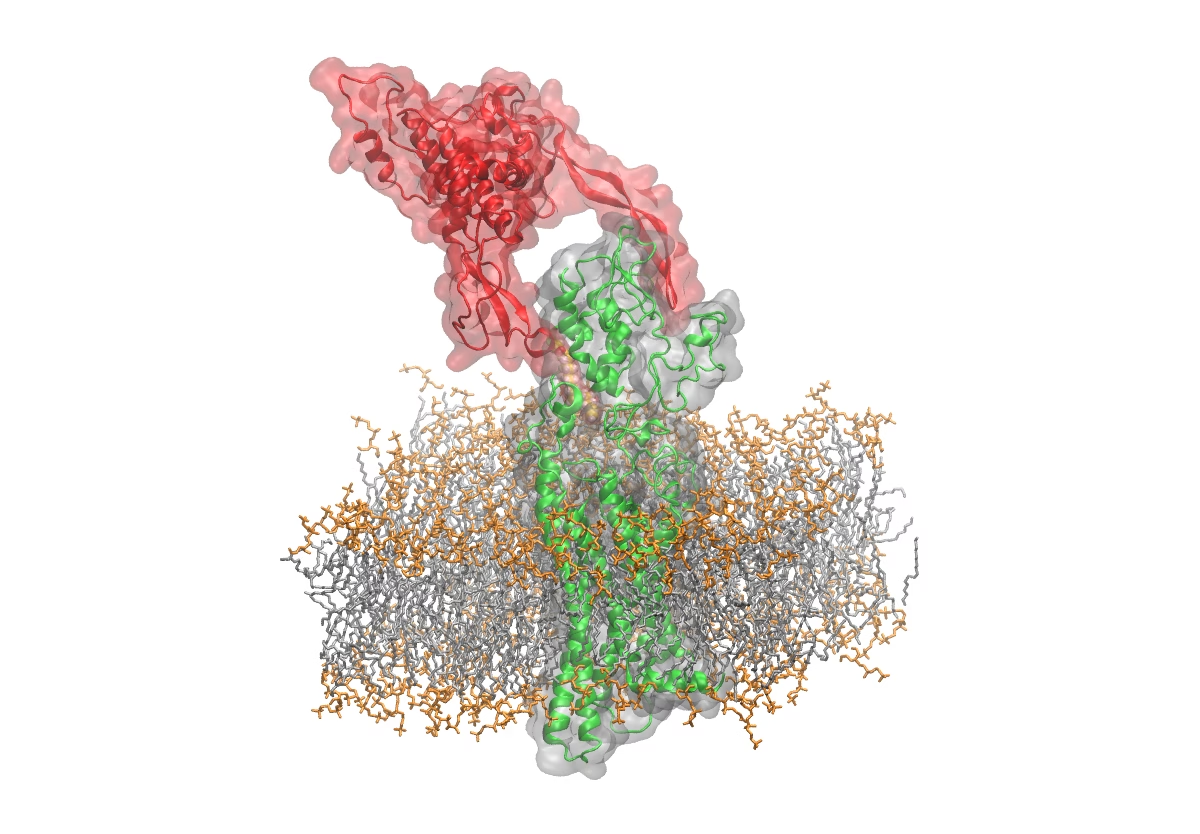
We investigate this issue for our clients by combining a number of approaches. We model the proteins bound in complex and unbound and use molecular dynamics and enhanced sampling approaches to assess what effect mutations will have on protein-protein binding. We provide our clients with detailed analyses and lists of mutants that are predicted to show higher binding affinity/specificity.
When it comes to antibody patents in particular it pays to consider including this investigation as part of the patent application. A list of equal binders and the following experiments can significantly increase the patent space for an antibody patent and provide an excellent offensive strategy to avoid your competitors using computational modelling to gain freedom to operate from your newly approved patent.
In silico drug discovery screens
High-throughput screens are costly and highly dependent on the ability to reproducibly miniaturise assays to 384 well plates, as well as on the size and quality of the compound libraries used.
What we do
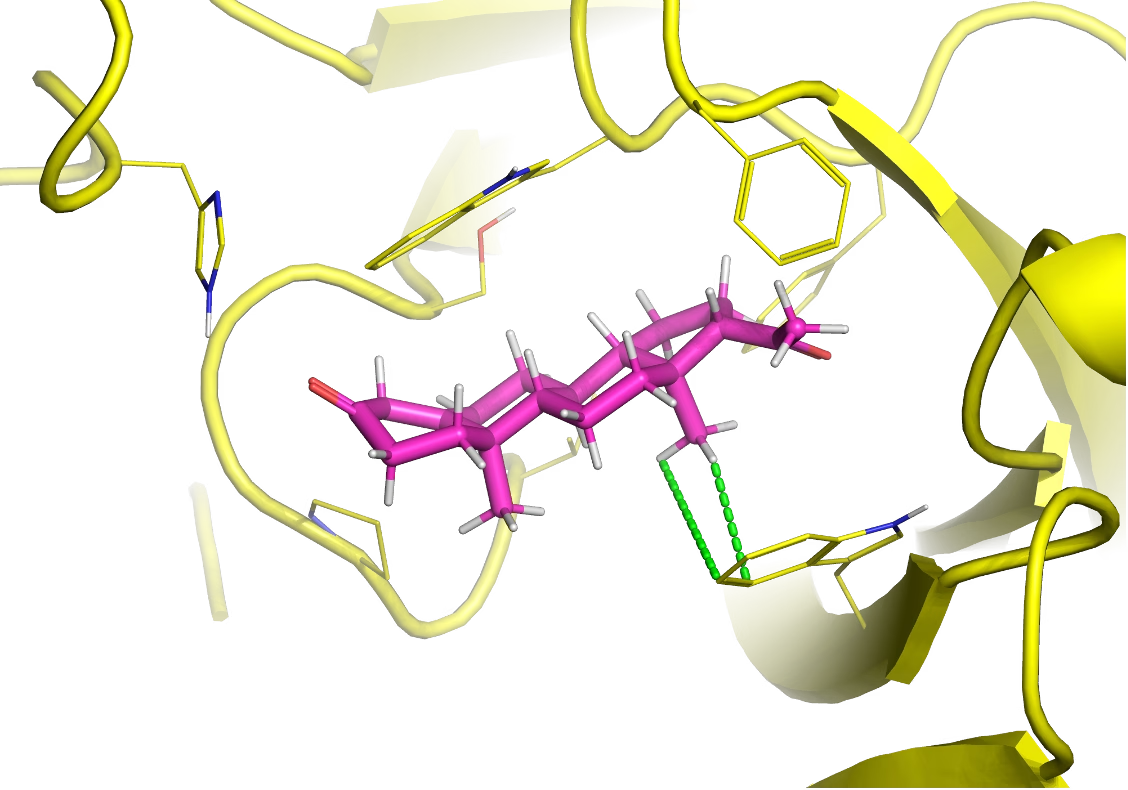
We use structure-based (molecular docking) and ligand-based (shape and pharmacophore matching) approaches to screen vast databases (4 million plus) of purchasable molecules with drug-like qualities. Re-screens, counterscreens and progressively more accurate scoring allow us to select diverse sets of 100 selective, high-scoring compounds that have been selected for a low affinity to related molecules or other domains. We additionally include information on where to best and most cost-effectively purchase those compounds.
Our clients walk away to screen only those compounds that have a large chance of being successful binders, greatly reducing cost and time involved.
Expert scientific support by the hour
Biotech teams are increasingly expected to move quickly while operating lean.
That means making the right scientific decisions early, avoiding unnecessary experiments, and bringing in specialised expertise only when it’s genuinely needed.
What we do
Our expert support sessions give your team rapid access to experienced structural biologists, and computational scientists who can help sense-check decisions, interpret difficult datasets, and provide practical guidance at critical project stages.
Whether it’s understanding complex KD/KP binding data, deciding which computational modelling approach is most appropriate, or helping junior team members navigate technical challenges more confidently, we provide targeted scientific input that helps your team move forward faster and with greater clarity.

Antibody patent expansion
Run feasibility studies before lodging expensive claims
What we do
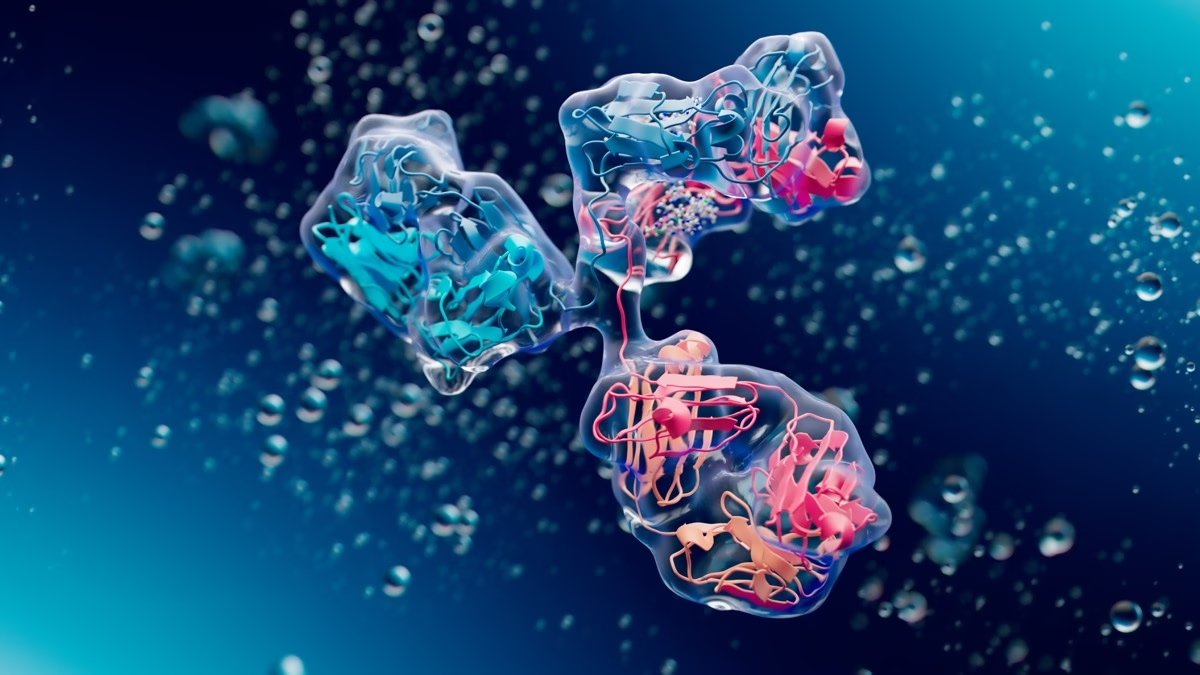
Using both AI-powered structure prediction and MD-simulations, we can analyze every possible sequence of your antibody’s CDR-regions, resulting in comprehensive data on all binding antibody variants and clear guidance for further optimization.
Hear it from our clients
"They were refreshingly realistic about what could be predicted computationally- no over-promising, just solid defensible modelling work paired with clear communication that everything would still need experimental validation.
Their reports were impeccable, well-structured and easy to follow and the team were always responsive and ready to help."
Catherine Owczarek
Discovery-to-Clinic Development Lead, Independent Scientific Leadership, Early Therapeutics
"The most valuable outcome has been the greater scientific certainty we’ve gained. We now have a validated pharmacological framework for our formulations that allows us to move forward with a much higher degree of confidence. Beyond the data, the most valuable "asset" we gained was the clarity provided by PNTG’s analysis, which has directly informed our downstream development strategy."
Jerome Sarris
CSO and Co-Founder Neurala Biosciences